
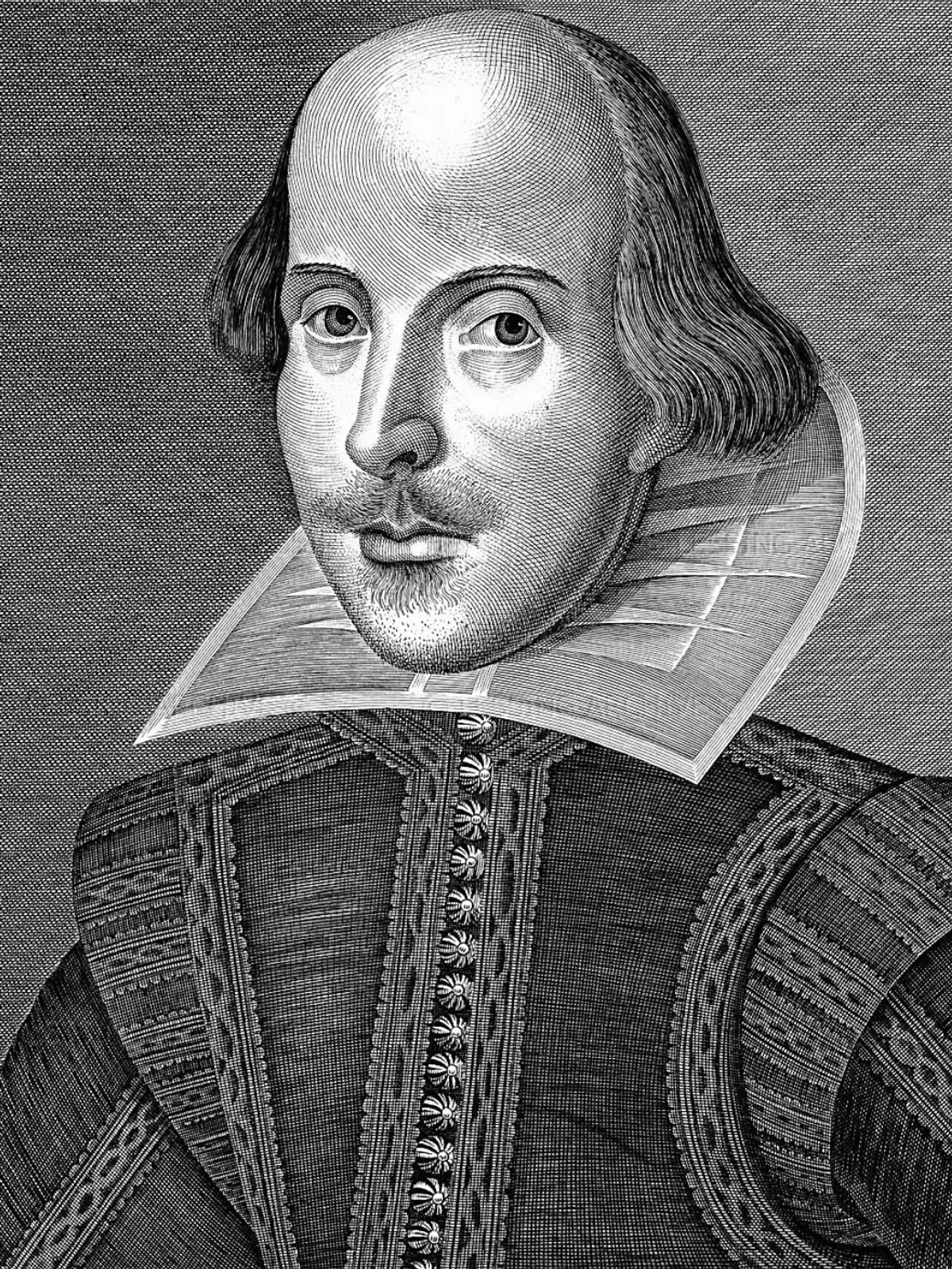
A Bard’s Legacy
We find quotations for our acrostics in a variety of ways. Often, we start out with a theme in mind such as “baseball” or “homonyms” and search out books and articles on the subject in question in hopes of finding a sparkling quote that fits the relevant specifications.
Other times, we chance upon fun quotes in the course of our general reading, as was the case for this week’s acrostic. Jane, a big fan of Penelope Lively, came upon the passage about the debt our language owes to William Shakespeare in Lively’s 1987 offering, Moon Tiger, a novel that otherwise has essentially nothing to do with Shakespeare (although it does have something to do with the uses of language).
The Bard of Avon certainly contributed much to the English still spoken today. As noted in Clue J., we were able to include six words or phrases attributed to Shakespeare among the answers in this week’s puzzle. And, in an effort to be puckish (Clue A.), we also tossed in a few more Shakespearean references.
We wish to thank Will Shortz and his expert beta testing team for notifying us that, in May of this year, the country of Nauru officially changed its name to Naoero. We had somehow missed the memo and omitted that key development in our initial version of Clue C.
For those of you who simply can’t get enough of our acrostics, you can find one more of them in the “Puzzle Mania” insert that accompanied the hard-copy version of The New York Times that appeared on newsstands (do they still exist?) on November 22. As a teaser, that acrostic includes an unusual feature that, to our knowledge, the NYT has never used before in any acrostic. And if any of you solved that acrostic, please let us know what you thought!
Returning to this week’s acrostic, we offer this lively video about William Shakepeare’s linguistic legacy: