
Genetic Modification
Some of you may know the voice of our friend Dan Charles from his many segments on food and science on National Public Radio. The quotation in this week’s acrostic comes from his fascinating – and prescient – 2001 book, the full title of which is Lords of the Harvest: Biotech, Big Money, and the Future of Food.
Dan describes the book as a “behind-the-scenes account of the creation of genetically engineered crops.” Whatever your views on the subject, we suspect that you would find the book both informative and entertaining. And it might make you think twice about your selections at the grocery store.
In addition to learning a lot about genetically modified food from Dan’s book, we also learned some fun stuff in constructing this puzzle. We didn’t know, for example, that the enormous religious complex at Angkor Wat in Cambodia was originally constructed as a Hindu Temple, dedicated to Vishnu, and only subsequently became a center of Buddhist worship.
And we had always assumed that the Seven Dwarfs sang “Hi-ho, hi-ho” as home from work they went. Turns out they (or someone on their behalf) spelled it “Heigh-ho.” And here they are, in all their dwarfish grandeur:
I loved the clue “Like guys, not dolls”. Genius! :O)
Thanks, BC! Our daughter, Becca, came up with that stroke of brilliance. And, yes, she is a genius. ;-o).
A nicely challenging, if not somewhat unsettling, Acrostic whose timely quote resonates today more than ever. Thanks.
Another fine acrostic, somewhat tougher, in my opinion than average.
Thank you for alerting us to Mr. Charles‘s book, which indeed sounds prescient.
Only nerdy nitpick is on definition G. I’m far from an audio expert, but my understanding is that the term “splicing“ was used when referring to cutting and reassembling analog tapes. For at least the last 25 years, I believe almost all recording studios have been digitally editing and the terms are typically “editing,” “cutting,” or “splitting.” So perhaps a more accurate clue would have been “formerly joined in a recording studio.” (Please award me the Pedant of the Week trophy.) 😉
My experience may be different than yours. Some years ago, I was digitally editing sound for use in theater productions. You are correct that we no longer cut audio tape, but we had digital sound waves on the computer that we did edit, ie, cut, move and rejoin (splice). Many old terms carry over into the newer technologies. So for me, word G was fine.
I stand corrected. Your hands-on knowledge wins the day!
Timely acrostic, as applicable to AI as genetics. I made a mess of my grid by confidently entering vomited instead of EGESTED and moors instead of HEATH. The clue for DNATEST was wicked clever, both in its own right, and as a way to sneak in a genetic reference. I didn’t know any of the general knowledge questions off the top of my head, which complicated things, but everything came together when I had enough answers to begin working back and forth between the grid and the clues. That’s what I like about acrostics: they can seem almost impossible, but they always finish with a satisfying rush. This was just a lovely challenge.
The YouTube was a welcome antidote to the topic at hand and its AI successors. Heigh-Ho indeed!
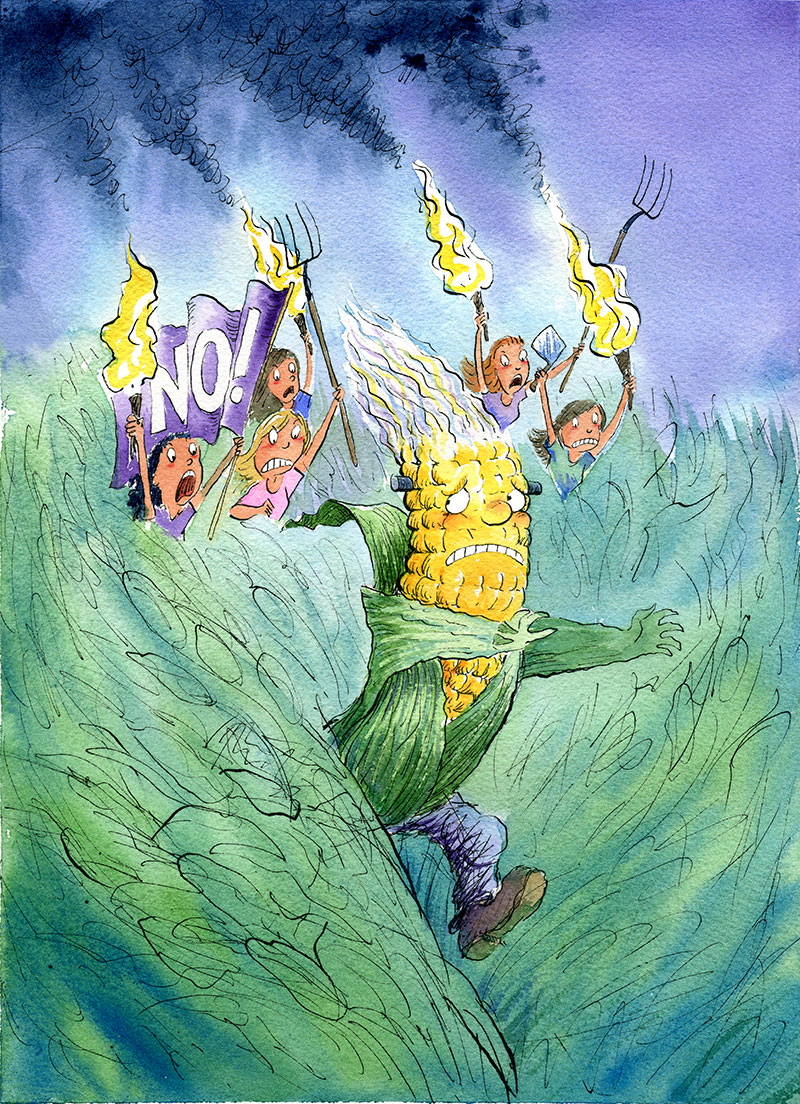
Oh wow wow wow. My wife and Brigid and I were working on the acrostic together. We had filled in some of the answers and were feeling pretty good about our progress. I had just filled in the word “genetic,” I think, when I looked down at the line for the author and title and my brain kind of froze. It’s hard to describe the shock of seeing one’s own name and work appear in our beloved NYT acrostic. Thanks, Dave and Jane, for an unforgettable Saturday morning! And thanks for your very generous words about the book. I love the cartoon, too!